8″ Hand Cup For IMP’S And Cladding
Original price was: $103.32.$72.38Current price is: $72.38.
39 in stock
Description
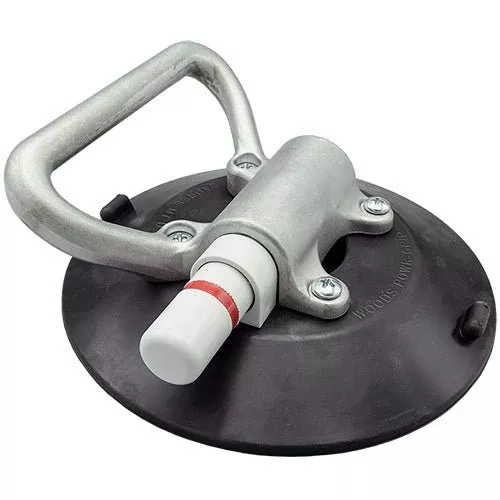
Wood’s Powr-Grip N4950C 8″ All-Metal Handle Vacuum Hand Cup for Insulated Metal Panels (IMPs) and Architectural Cladding (60 lbs / 27 kg)
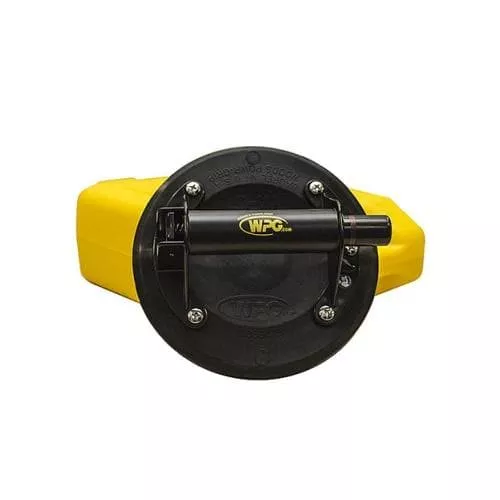
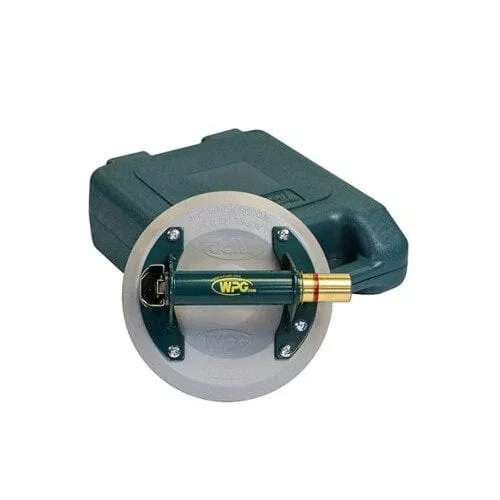
The Wood’s Powr-Grip N4950C is a heavy-duty vacuum hand cup engineered specifically for the safe lifting and handling of insulated metal panels (IMPs), architectural cladding, and other textured or irregular nonporous metal surfaces, featuring an all-metal handle and plunger for maximum durability in the demanding construction environments where cladding installation takes place. Equipped with an 8″ (20 cm) low-marking VPFS8C suction pad specifically formulated for cladding surfaces, the N4950C is rated for loads up to 60 lbs (27 kg) and attaches to most panel surfaces including patterns and textures — while the low-marking rubber compound protects factory-applied paint and coating finishes from marks or stains. The N4950C (SKU: 91515CE, Model: N4950C) is manufactured by Wood’s Powr-Grip and ships with a protective carrying case.
What are IMPs? Insulated Metal Panels (IMPs) are factory-assembled sandwich panels consisting of an insulating foam core bonded between two metal skins — typically steel or aluminum — used extensively in commercial and industrial building envelopes for walls, roofs, and cold storage facilities. IMP outer faces are typically profiled, ribbed, or embossed, creating a surface texture that prevents standard flat rubber pads from achieving full perimeter contact. The VPFS8C pad is specifically engineered for this surface type, and the low-marking compound protects the factory-applied finish that is critical to the panel’s weatherproofing and warranty.
The N4950C is the all-metal counterpart to the plastic-handle N4000C — both use the same VPFS8C cladding-specific low-marking pad and share the same 60 lb capacity, flat-only rating, and IMP/cladding application, but the N4950C uses an all-metal handle and plunger (maximum structural rigidity and long-term durability) while the N4000C uses industrial-grade plastic for both (lightweight, rust-resistant, with field-replaceable handle, release valve, and plunger). For cladding installation contractors who use IMP cups intensively in professional environments and prioritize handle durability and grip rigidity over weight savings and component replaceability, the N4950C is the premium choice. The VPFS8C pad is interchangeable between the N4950C and N4000C.
Key Features & Benefits
VPFS8C Pad — Specifically Designed for IMP and Cladding Surfaces
The VPFS8C pad is a cladding-specific low-marking rubber compound and geometry engineered for the surface profile of insulated metal panels and architectural cladding. IMP and cladding surfaces present a unique vacuum attachment challenge: the profiled, ribbed, or embossed metal face is nonporous and theoretically vacuum-compatible, but the surface texture prevents standard flat pads from achieving full perimeter contact. The VPFS8C addresses this by conforming to the cladding surface profile while leaving no marks or residue on the factory-applied coating finish. This is a different pad from the G0695TS used on the N4000TS and N4950TS (general textured surfaces) — the VPFS8C is specifically designed for the geometry of IMP and cladding profiles.
All-Metal Handle and Plunger — Maximum Durability for Heavy-Use Construction Environments
Both the handle and plunger are constructed from metal, providing maximum structural rigidity and long-term durability for repeated heavy-duty use in professional cladding installation environments. The all-metal construction resists deformation under sustained heavy loads and delivers consistent vacuum engagement and release action over the tool’s service life — making the N4950C the correct choice for cladding contractors who use IMP cups intensively and prioritize handle longevity and grip performance over the lightweight and field-serviceability advantages of the plastic-handle N4000C. This is the primary differentiator over the N4000C.
Low-Marking Rubber — Protects Factory-Applied Cladding Finishes
IMP and architectural cladding panels are supplied with factory-applied paint and coating finishes integral to the panel’s weatherproofing performance and manufacturer warranty. The VPFS8C’s low-marking compound is specifically selected to prevent rubber marks or residue on these coated metal surfaces, making the N4950C safe for use on finished cladding panels throughout the installation process without risking finish damage that could void the panel warranty or compromise weatherproofing.
60 lb (27 kg) Rated Load Capacity on Cladding Surfaces
The N4950C is rated for loads up to 60 lbs (27 kg) on flat IMP and cladding surfaces, matching the N4000C. The lower capacity compared to general textured-surface cups (75 lb on N4000TS and N4950TS) reflects the specific vacuum performance achievable on IMP and cladding surface profiles. Always confirm the actual panel weight before selecting this tool, and plan multi-cup lifts for panels exceeding the single-cup rating.
Attaches to Most Panel Surfaces Including Patterns and Textures
The VPFS8C pad is designed to attach to most IMP and cladding panel surface profiles, including ribbed, corrugated, embossed, and patterned metal faces. Always test on the specific panel surface profile before committing to a production lift — vacuum performance varies by surface profile geometry and depth, and extremely deep or irregular profiles may prevent a reliable seal.
Fast Attach and Release — Red-Line Indicator — Protective Carrying Case
The quick-engage vacuum mechanism supports efficient workflows during cladding installation. The red-line indicator provides a continuous visual warning if vacuum pressure drops during a lift. The N4950C ships with a protective carrying case that keeps the VPFS8C pad clean and protected on construction sites.
Common Applications
Insulated Metal Panel (IMP) Installation
The N4950C is a purpose-built tool for handling IMPs during commercial and industrial building envelope installation. Applications include wall panel installation, roof panel installation, cold storage facility construction, and any project using IMP building envelope systems where maximum handle durability is required.
Architectural Cladding Panel Handling
Architectural cladding installers handling profiled metal cladding panels — including ribbed aluminum cladding, corrugated metal panels, and embossed steel cladding — use the N4950C where the panel surface texture prevents standard cup attachment, the low-marking compound protects the factory finish, and the all-metal construction provides the handle durability required for intensive professional use.
Cold Storage and Refrigerated Facility Construction
IMPs are the primary building envelope system for cold storage facilities, food processing plants, and refrigerated warehouses. The N4950C is the correct tool for handling IMP panels during construction of these facilities, where the panel surface profile and finish protection requirements are identical to standard IMP installation.
High-Volume Professional Cladding Installation
For cladding contractors handling large volumes of IMP panels on commercial and industrial projects, the N4950C’s all-metal construction provides the service life and handle performance required for high-cycle professional use. Where the N4000C’s field-replaceable plastic components offer a serviceability advantage, the N4950C’s all-metal construction offers a durability advantage for operations that prioritize tool robustness over component replaceability.
Profiled Metal Sheet Handling
Beyond IMPs, the N4950C is suitable for handling other profiled, ribbed, or embossed nonporous metal sheets where the surface texture prevents standard cup attachment and where the low-marking compound is required to protect the metal finish. Always test on the specific surface profile before committing to a production lift.
Compatible Materials
- Insulated metal panels (IMPs) — profiled steel and aluminum faces (flat)
- Ribbed and corrugated architectural metal cladding (flat)
- Embossed and profiled metal building envelope panels (flat)
- Textured and irregular nonporous metal surfaces (flat) — where low-marking is required
- Profiled metal sheet with factory-applied paint or coating finishes (flat)
Not compatible with: curved surfaces (flat only); porous surfaces; surface profiles so deep or irregular that the VPFS8C pad cannot achieve any vacuum seal — always test before committing to a production lift; concrete, brick, wood, or drywall.
Product Documents
- N4950C Instructions (PDF)
- N4950C Troubleshooting Guide (PDF)
- N4950C Cladding Hand Cup Specifications (PDF)
Application Instructions
Step 1: Panel and Surface Assessment
- Confirm the panel is flat and nonporous — the N4950C is rated for flat surfaces only.
- Identify the panel surface profile — confirm it is an IMP, architectural cladding, or profiled metal panel for which the VPFS8C pad is designed.
- Test the pad seal on the specific panel surface profile before committing to a production lift — vacuum performance varies by surface profile geometry and depth.
- Verify the panel weight does not exceed 60 lbs (27 kg) per cup, or plan a multi-cup lift for heavier panels.
Step 2: Pad Inspection and Preparation
- Inspect the VPFS8C pad for cuts, tears, hardening, embedded particles, or contamination. Replace if damaged.
- Wipe the pad face clean with a lint-free cloth before each lift — contamination on the low-marking pad can transfer to the panel finish.
- Ensure the pad is at operating temperature (above 10°F / -12°C) before use.
Step 3: Attaching the Cup
- Position the pad against the panel surface at the planned contact zone.
- Engage the vacuum mechanism using the metal handle/plunger — on profiled cladding surfaces, more pumping strokes may be required than on smooth surfaces.
- Check the red-line vacuum indicator — confirm a stable vacuum before lifting.
- Apply a controlled test load (firm downward pull) to verify seal integrity before committing to the full lift. This step is non-negotiable on cladding surfaces where vacuum performance varies by profile.
Step 4: Lifting, Positioning, and Release
- Lift smoothly — avoid sudden jerking motions that can break the vacuum seal on profiled surfaces.
- Monitor the red-line indicator continuously throughout the lift.
- Do not exceed the 60 lb (27 kg) rated load capacity per cup.
- Lower the panel fully to a stable surface or final position before releasing the vacuum.
- Engage the release mechanism slowly and in a controlled manner.
- Inspect the panel finish after release — if any marks are present, inspect the pad for contamination before the next lift.
- Clean the pad and store in the supplied protective carrying case.
Technical Specifications
| Specification | Details |
|---|---|
| Model | N4950C |
| SKU | 91515CE |
| Vendor | Wood’s Powr-Grip |
| Load Capacity | 60 lbs [27 kg] |
| Pad Diameter | 8″ [20 cm] |
| Pad Model | VPFS8C |
| Rubber Type | Low-Marking (Cladding-Specific) |
| Handle Type | Metal |
| Plunger Type | Metal |
| Surface Texture | Flat, Textured, Irregular, Cladding (IMP and profiled metal) |
| Material Porosity Required | Nonporous |
| Allowable Surface Curvature | Flat only |
| Ideal Uses | Attaches to most panel surfaces including patterns and textures |
| Maximum Elevation | 5,000 ft [1,500 m] |
| Operating Temperature Range | 10°F to 120°F [-12°C to 49°C] |
| Vacuum Loss Indicator | Yes (red-line) |
| Includes | Protective carrying case |
Safety Data Summary
Hazard Information
- Vacuum retention on IMP and cladding surfaces is lower than on smooth surfaces — the 60 lb capacity reflects this; never attempt to lift loads rated for smooth-surface cups using the N4950C
- Vacuum performance varies by IMP and cladding surface profile — always test on the specific panel before committing to a production lift
- Vacuum loss during a lift can result in sudden panel drop, causing serious injury or property damage
- Overloading beyond 60 lbs (27 kg) per cup may cause sudden cup release without warning
- Pad contamination can transfer marks to factory-applied panel finishes — inspect and clean the pad before every lift
- Damaged or contaminated VPFS8C pads must be replaced before use
- Do not use on curved surfaces — flat surfaces only
- Do not use above 5,000 ft (1,500 m) elevation
Personal Protective Equipment
- Hard hat — required on construction sites
- Safety glasses or face shield
- Cut-resistant gloves rated for metal panel handling
- Steel-toed safety footwear
- High-visibility vest where required by site safety plan
- Fall protection equipment when working at height during cladding installation
Safe Handling
- Always test on the specific IMP or cladding surface profile before committing to a production lift
- Inspect and clean the VPFS8C pad with a lint-free cloth before every lift to protect the panel finish
- Never exceed the rated 60 lb load capacity per cup
- Monitor the red-line indicator continuously — lower the panel immediately if vacuum loss is detected
- Inspect the panel finish after release and address any contamination source immediately
- Store in the supplied carrying case to protect the pad between uses on construction sites
Frequently Asked Questions
Q: What is the difference between the N4950C and the N4000C?
A: Both use the same VPFS8C cladding-specific low-marking pad, the same 60 lb capacity, and the same flat-only IMP/cladding application. The N4950C has an all-metal handle and plunger (maximum structural rigidity and long-term durability for intensive professional use) while the N4000C has an all industrial-grade plastic handle and plunger (lightweight, rust-resistant, with field-replaceable handle, release valve, and plunger). Choose the N4950C for maximum handle durability and grip performance in high-intensity cladding installation; choose the N4000C for lightweight construction, corrosion resistance, or when field-replaceable components are a priority. The VPFS8C pad is interchangeable between both models.
Q: What is an IMP and why does it need a special vacuum cup?
A: An Insulated Metal Panel (IMP) is a factory-assembled sandwich panel with an insulating foam core bonded between two metal skins (typically steel or aluminum), used extensively in commercial and industrial building envelopes. The outer metal face is typically profiled, ribbed, or embossed — which prevents standard flat rubber pads from achieving full perimeter contact, and the factory-applied coating finish must be protected from rubber marks. The N4950C’s VPFS8C pad is specifically engineered for this surface type.
Q: How does the N4950C differ from the N4950TS?
A: Both are 8″ flat-surface cups with all-metal handle and plunger and low-marking rubber, but they use different pad models for different surface types. The N4950TS uses the G0695TS soft rubber pad designed for general textured and irregular surfaces (patterned glass, brushed metal, textured tile). The N4950C uses the VPFS8C pad specifically designed for IMP and architectural cladding surface profiles, with a lower 60 lb capacity (vs. 75 lb on N4950TS) reflecting the more challenging vacuum attachment geometry of cladding surfaces. Use the N4950C for IMPs and cladding; use the N4950TS for general textured surfaces.
Q: Is the VPFS8C pad interchangeable with the N4000C?
A: Yes. Both the N4950C and N4000C use the VPFS8C cladding-specific low-marking pad (8″ diameter), making replacement pads interchangeable between the two models. Do not substitute the G0695TS (N4950TS) or VPFS8L (N4950LLM) pads — the VPFS8C is specifically required for IMP and cladding applications. Replacement pads are available through Wood’s Powr-Grip authorized distributors.
Q: What replacement pad does the N4950C use?
A: The N4950C uses the VPFS8C low-marking cladding-specific pad (8″ diameter). Replacement pads are available separately through Wood’s Powr-Grip authorized distributors.
Q: Is this product made to order?
A: Yes. This product is made to order and all sales are final. Please confirm your panel surface profile, flatness, and load requirements before placing your order.
California Residents: ⚠️ WARNING: Cancer and/or Reproductive Harm — www.p65Warnings.ca.gov
Related products
-
- Sale!
- Hardware
Sunflower, without Resin
- Original price was: $49.60.$31.35Current price is: $31.35.
- Add to cart
-
- Sale!
- Hardware
6″ Rigid Handle Hand Cup for Flat Surfaces – Pack of 4
- Original price was: $192.58.$122.89Current price is: $122.89.
- Add to cart
-
- Sale!
- Hardware
Cove Profile Router Bit
- Original price was: $177.60.$115.87Current price is: $115.87.
- Add to cart
-
- Sale!
- Hardware
R1048 Stone Saw
- Original price was: $1,408.16.$964.02Current price is: $964.02.
- Add to cart
-
- Sale!
- Hardware
DBD Abaco Drop Bottom Dumpster
- Original price was: $1,364.57.$756.41Current price is: $756.41.
- Add to cart
-
- Sale!
- Hardware
8″ Industrial-Grade Plastic Hand Cup for Flat, Textured Surfaces
- Original price was: $72.24.$36.15Current price is: $36.15.
- Add to cart
-
- Sale!
- Hardware
R1040 Stone Rail Saw
- Original price was: $1,121.14.$577.05Current price is: $577.05.
- Add to cart
-
- Sale!
- Hardware
Weha Cont. Rim Router Bits – V (Full Bullnose) – 2CM
- Original price was: $274.36.$182.70Current price is: $182.70.
- Add to cart